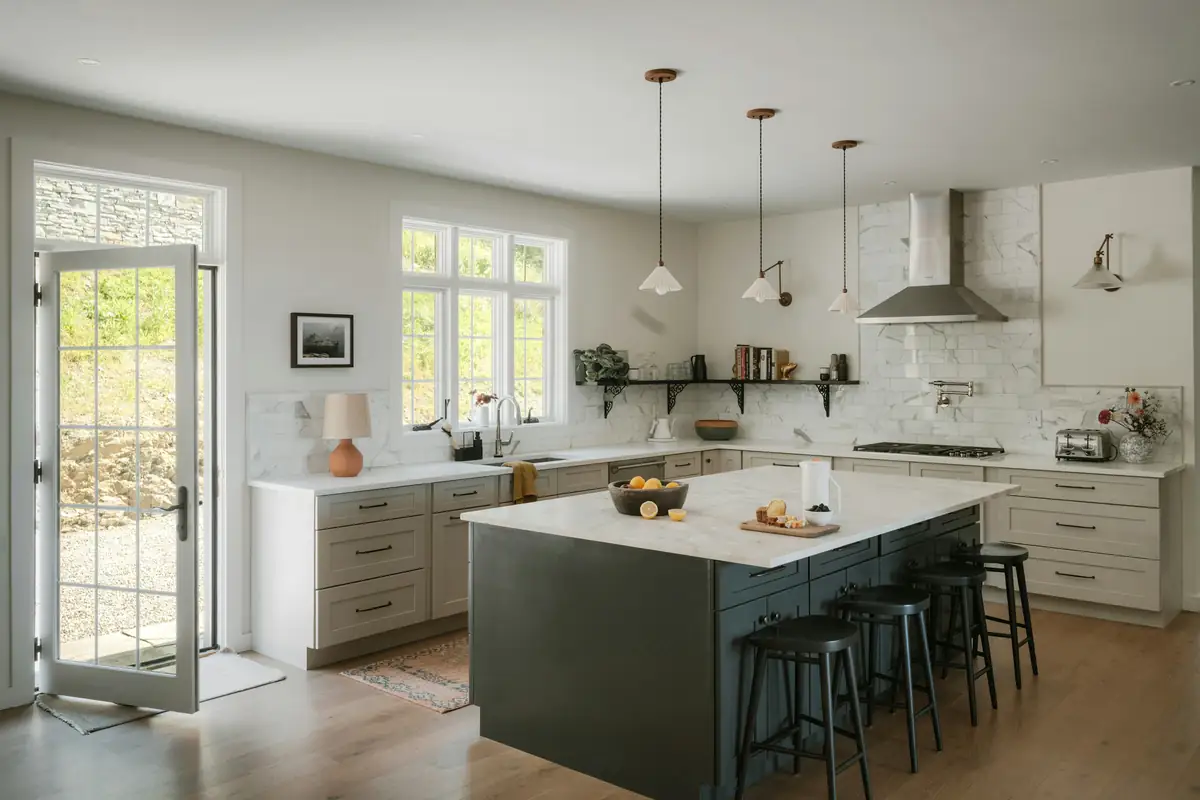
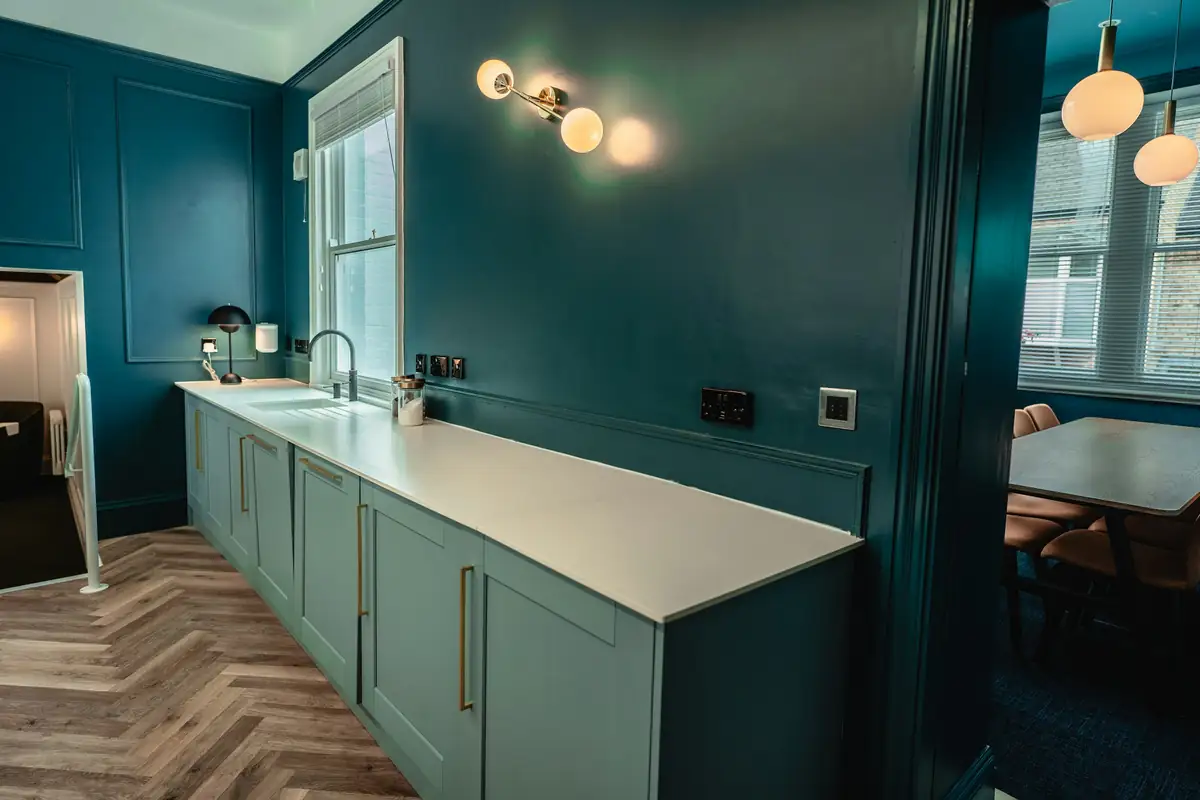

In short: an in-frame door sits inside a solid timber frame on the front of the cabinet, flush with it. A lay-on door sits on top of the cabinet front and covers its edges. In-frame is the traditional cabinetmaker's construction. It's stronger and keeps even gaps for decades, but costs about 10–15% more and gives slightly less internal space.
How to tell them apart
Close a door and look at the edge. If you can see a frame around the door, with an even gap of 2–3 mm, it's in-frame. If the door covers the front of the cabinet and you see only the gaps between doors, it's lay-on.
Why in-frame costs more
Every in-frame door is fitted to its own opening by hand. Frames are mortise-and-tenoned, and the hinges are set into hand-cut recesses. A lay-on door can be made to a standard size and hung on adjustable concealed hinges in minutes.
How they age
A well-made in-frame kitchen keeps its gaps even because the frame holds everything square. Lay-on doors can drift out of line as hinges loosen, though they're easily adjusted.
When lay-on is the better choice
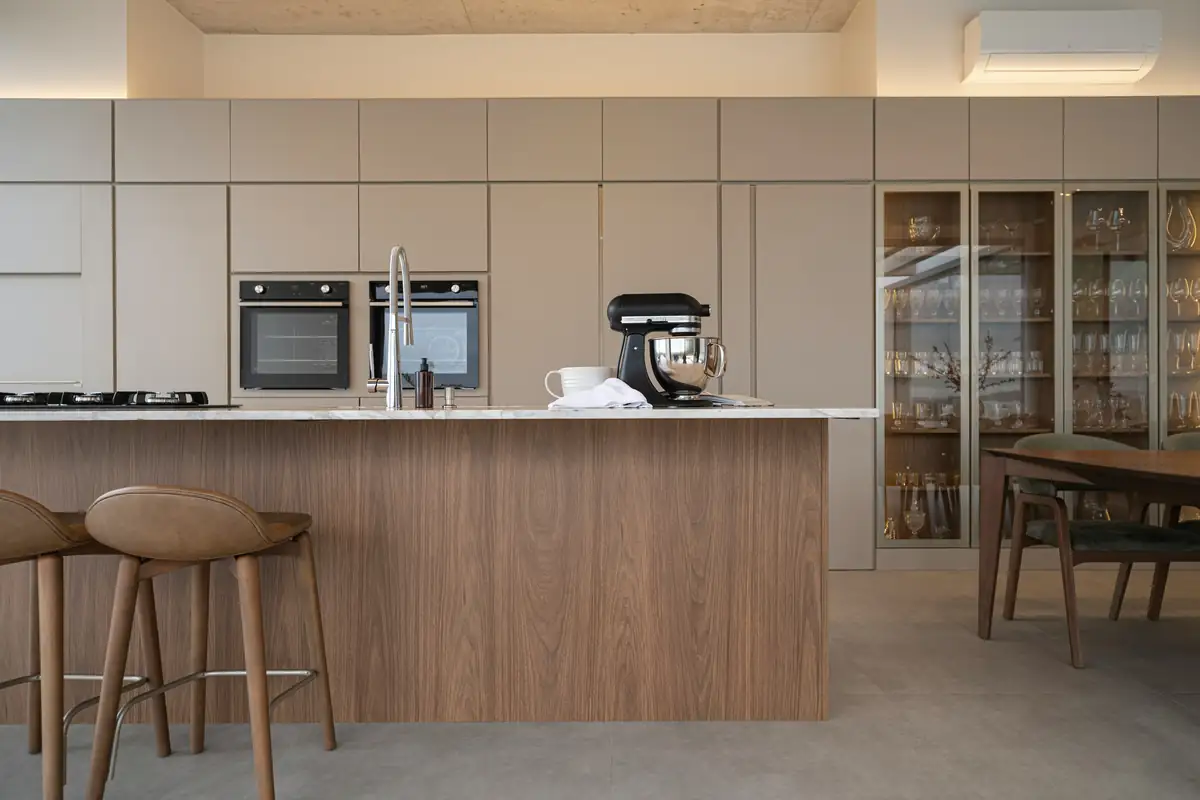
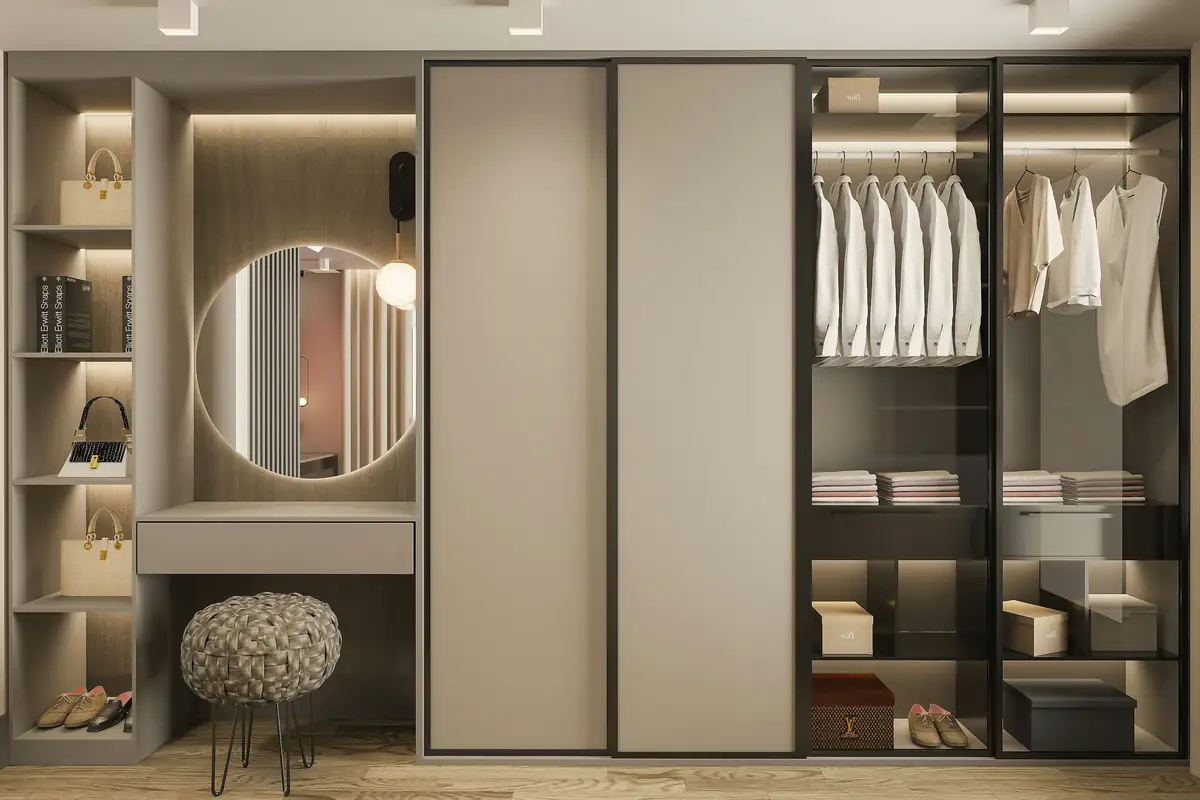
- In a contemporary kitchen, where you want a flat, continuous front. Our Avon collection is lay-on for this reason.
- Where every centimetre of drawer width counts.
- Where budget matters more than the traditional look.
See both in our Clifton (in-frame) and Avon (lay-on, handleless) collections, or come and open the drawers at our showrooms.